
Some interviews age because they focus on results.
Others become more valuable because they reveal the thinking behind them.
Originally released in March 2018, this conversation with Sutton United chairman Bruce Elliott came at a time when the club was enjoying another remarkable season under Paul Doswell. Promotion was still a dream rather than a reality, the Arsenal FA Cup tie was fresh in everyone’s memory, and many of the biggest decisions in the club’s recent history were still to come.
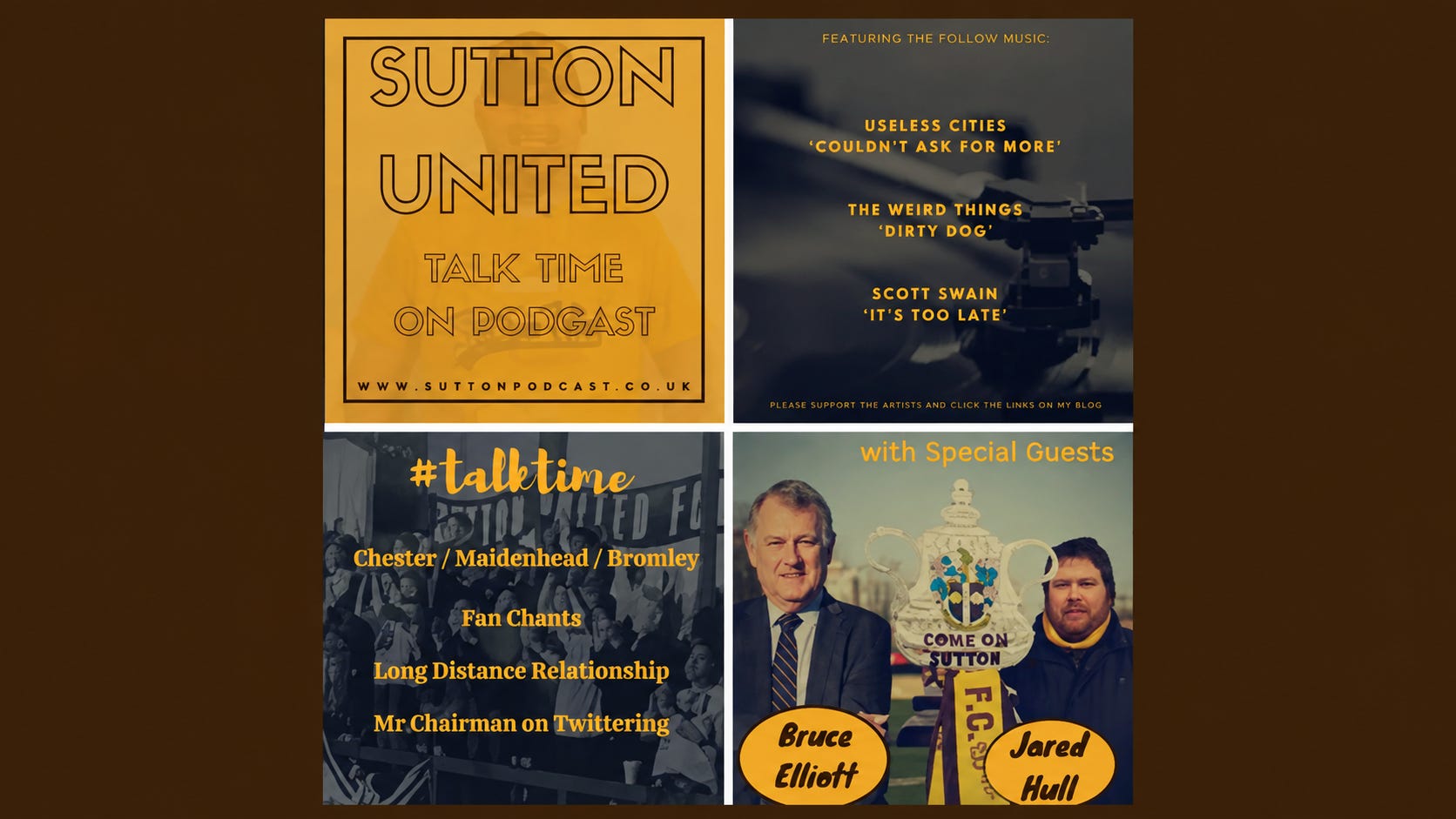
Listening back today, it’s fascinating how many of Bruce’s themes still define Sutton United.
One thing becomes clear almost immediately.
Bruce doesn’t see himself as a chairman first.
He sees himself as a supporter.
Having first come to Gander Green Lane with his father in the 1960s, he talks about progressing from supporter, to committee member, to chairman, while never losing sight of why volunteers continue to give so much of their time to the club.
That volunteer culture becomes one of the central themes of the conversation.
Bruce explains that continuity is one of Sutton United’s greatest strengths. While many clubs constantly change owners, directors and volunteers, Sutton has always relied on people who simply care about the club and want to leave it in a better place than they found it.
It’s a philosophy that perhaps explains more than any league table ever could.
We also discuss why Sutton has never chased short-term success at any cost.
Rather than gambling on promotions or spending beyond its means, Bruce explains the importance of measured, sustainable growth. It isn’t always the quickest route, but it’s one designed to ensure the club is still here decades later rather than becoming another cautionary tale.
Looking back now, it’s difficult not to admire just how consistent that approach has remained.
Naturally, the conversation turns to Paul Doswell.
Bruce speaks warmly about the manager’s incredible influence, not only in recruitment and coaching, but in changing the entire culture of the football club. His description that “Paul interviewed us and appointed us as his club” remains one of the most memorable lines from the interview and perfectly captures the trust that developed between board and manager.
We also revisit one of the biggest moments in Sutton United’s modern history.
The Arsenal FA Cup tie.
Bruce gives an honest account of the excitement, the exhaustion and the enormous logistical challenge of staging one of the biggest matches the club had ever hosted. Rather than pretending everything was perfect, he openly discusses mistakes that were made during ticket allocation, why the club changed course and how supporters ultimately helped make the occasion a success.
That willingness to acknowledge what could have been done better says a great deal about the culture at Sutton.
Perhaps the most interesting section, listening back with the benefit of hindsight, concerns the future.
At the time, promotion to the Football League would have meant losing the much-loved 3G pitch. Bruce explains the dilemma facing the club. How could Sutton pursue promotion without damaging the academy, disability football, girls’ football and all the community programmes built around that facility?
We now know what happened next.
Promotion came. The pitch changed. The club adapted.
But hearing those discussions before any of that unfolded provides a fascinating snapshot of the balancing act the board was trying to manage.
One thing shines through above everything else.
Every major decision was viewed through one question.
What is best for Sutton United in the long term?
Not next Saturday.
Not next season.
The next generation.
That’s why this episode remains worth revisiting. Yes, there are references to the 2017/18 season and the excitement of another promotion challenge. But far more importantly, it offers a rare opportunity to hear directly from the chairman about the principles that have shaped Sutton United for decades.
It’s a genuine peek behind the Amber Curtain.
And while football changes remarkably quickly, good stewardship rarely goes out of fashion.